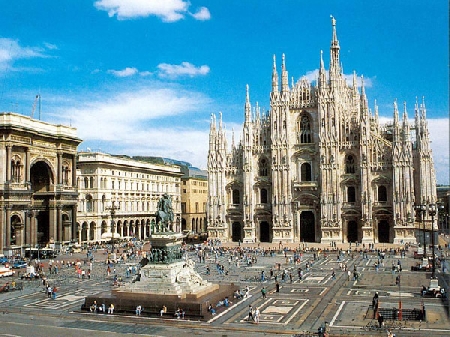
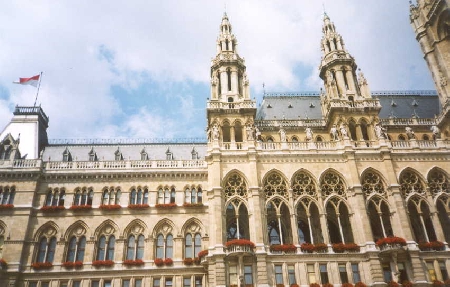
Milan
The information that can be useful for your travel.
Pictures of Milan
Pictures of Milan at Panoramio
|
Travel advices and warnings Milan
| |||||||||||||||||||||||||||||||||||||||||||||||||||||||||||||||||||||||||||||||||||||||



Milan, ItalyWednesday 15, July |
|
From wikipedia about Milan
Milan is the second-largest city in Italy, the capital city of the region of Lombardy and of the province of Milan. The city proper has a population of about 1. 3 million, while its urban area, roughly coinciding with its administrative province and the bordering Province of Monza and Brianza (created in 2004 splitting the northern part from the province of Milan itself), is one of Europe's largest with an estimated population of over 4 million spread over, with a consequent population density of more than 2, 000 inhabitants/km². The growth of many suburbs and satellite settlements around the city proper following the great economic boom of the 1950-60s and massive commuting flows suggest that socioeconomic linkages have expanded well beyond the boundaries of the city proper and its agglomeration, creating a metropolitan area of 7. 4 million population expanded all over the central section of Lombardy region., the area of Europe with the highest population and industrial density.The city was founded by the Insubres, a Celtic people.
Milan was later captured by the Romans in 222 BC, and later was the capital city of the Western Roman Empire from 286 until 402 AD. Milan became one of the most prosperous Italian cities during the High Middle Ages, playing a primary role in the Lombard League. Later Milan became the capital city of the Duchy of Milan, being ruled by the Visconti, the Sforza, the Spanish and the Austrians. In 1796, Milan was conquered by the French troops of Napoleon I, who made it the capital of the puppet state of the Kingdom of Italy in 1805. Later Milan became the capital city of the Kingdom of Lombardy–Venetia, which was part of the Austrian Empire. In 1859 the city was unified with the Kingdom of Sardinia, which later became the Kingdom of Italy. During the Romantic period, Milan was a major cultural centre in Europe, attracting several artists, composers and important literary figures. Later, during World War II, the city was badly affected by Allied bombings, and after German occupation in 1943, Milan became the main hub of the Italian resistance. Despite this, Milan saw a post-war economic growth, attracting thousands of immigrants from Southern Italy and abroad.
Over the years, Milan has had an increase in the number of international inhabitants, and 15. 2% of Milan's population is foreign born. The city remains one of Europe's main transportation and industrial hubs, and Milan is the EU's 10th most important centre for business and finance (2009), the city is the world's 12th most expensive to live in. Its economic environment has made it, according to several studies, the world's 20th and Europe's 10th top business and financial centre, having been highly successful in terms of city branding.
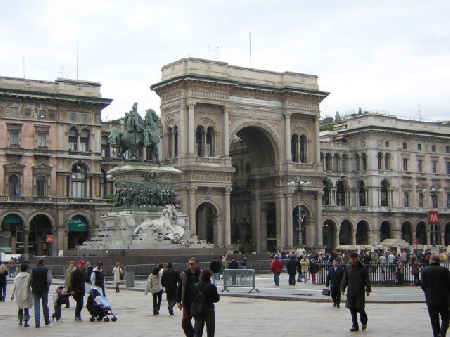
Milan is recognised as a world fashion and design capital, with a major influence in commerce, industry, music, sport, literature, art and media; it has thus been ranked by GaWC as an Alpha world city in 2010, as well as the 42nd most important global city. The Lombard metropolis is especially famous for its fashion houses and shops (such as along Via Monte Napoleone) and the Galleria Vittorio Emanuele in the Piazza Duomo (reputed to be the world's oldest shopping mall). The city has an ancient cultural heritage and legacy, vibrant nightlife, and is home to numerous famous dishes, such as the Panettone Christmas cake and the risotto alla Milanese. The city has a particularly famous musical, particularly operatic, tradition, being the home of several important composers (such as Giuseppe Verdi) and theatres (such as the Teatro alla Scala). Milan is also well known for containing several important museums, universities, academies, palaces, churches and libraries (such as the Academy of Brera and the Castello Sforzesco) and two renowned football teams: A. C. Milan and F. C. Internazionale Milano. Euromonitor International ranked Milan as the world's 63rd most visited city in 2009, with 1. 894 million arrivals. The city hosted the 1906 World Exposition and will host the 2015 Universal Exposition.
Inhabitants of Milan are referred to as "Milanese" (Italian: Milanesi or informally Meneghini or Ambrosiani). Milan, for its pivotal economic role and its fervent political and cultural activity that often anticipates national trends, it is often nicknamed as the "moral capital of Italy".
Do you have a travel question?
Ask your question about travel on our Forum
Ask your question about travel on our Forum