Naples
The information that can be useful for your travel.
Pictures of Naples
Pictures of Naples at Panoramio
|
Travel advices and warnings Naples
| |||||||||||||||||||||||||||||||||||||||||||||||||||||||||||||||||||||||||||||||||||||

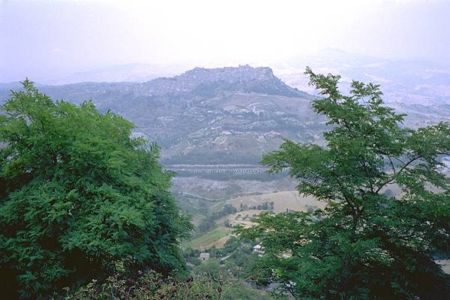
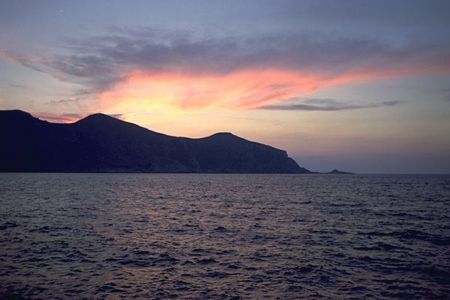
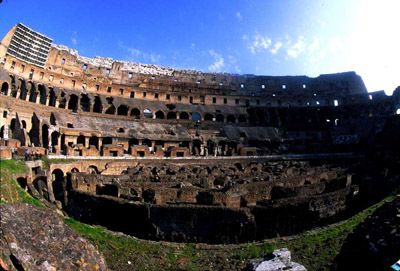
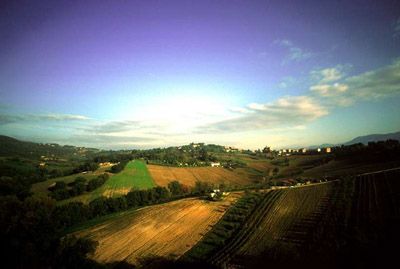


Naples, ItalyTuesday 14, July |
|
From wikipedia about Naples
Naples (Napoli, Neapolitan: Napule) is a city in Southern Italy, situated on the country's west coast by the Gulf of Naples. Lying between two notable volcanic regions, Mount Vesuvius and the Phlegraean Fields, it is the capital of the region of Campania and of the province of Naples. Naples is known internationally for its rich history, art, culture, architecture, music, and gastronomy, and has played an important political and cultural role both within and beyond the Italian peninsula throughout its 2, 800-year existence.Founded in the 9th-8th century BC as a Greek colony, Naples is one of the oldest continuously inhabited cities in the world. Originally named Parthenope (Παρθενόπη) and later Neápolis (Νεάπολις - English: New City), it was among the foremost cities of Magna Graecia, playing a key role in the merging of Greek culture into Roman society. Naples eventually became part of the Roman Republic as a major cultural center; the prominent Latin poet, Virgil, received part of his education in the city and later resided in its environs. As a microcosm of European history, the city has witnessed the rise and fall of numerous civilizations, each leaving traces in its art and architecture. Although many Greek and Roman ruins are in evidence in Naples and its surroundings, the most prominent forms of architecture now visible derive from the Medieval, Renaissance, and Baroque periods.
Naples' historic city centre is the largest in Europe, covering 1, 700 hectares, and is listed by UNESCO as a World Heritage Site. Over the course of its long history, Naples has been the capital of duchies, kingdoms, and one Empire, and has consistently been a major cultural center with a global sphere of influence, particularly during the Renaissance and Enlightenment eras. In the immediate vicinity of Naples are numerous sites of great cultural and historical significance, including the Palace of Caserta and the Roman ruins of Pompeii, and Herculaneum.
Between 1282 and 1816, Naples was the capital city of a kingdom that bore its name - the Kingdom of Naples. Then, in union with Sicily, it became the capital of the Two Sicilies until the unification of Italy in 1861. During the Neapolitan War of 1815, Naples strongly promoted Italian unification.
As of 2011, Naples has a population of around 1 million people within its administrative limits. According to different sources, its metropolitan area is either the second most populated metropolitan area in Italy after Milan (with 4, 434, 136 inhabitants according to Svimez Data or 4, 996, 084 according to Censis, the Italian census institute)). In addition, Naples is Italy's most densely populated major city, with over 8, 000 people per square kilometre.
Naples is the fourth-richest city in Italy, after Milan, Rome and Turin. It is the world's 91st richest city by purchasing power, with a GDP of $43 billion, surpassing the economies of Budapest and Zurich. The port of Naples is one of the most important in Europe, and has the world's second-highest level of passenger flow, after the port of Hong Kong. Although the city has experienced remarkable economic growth in recent decades, and unemployment levels in the city and surrounding Campania have decreased since 1999, Naples is still characterized by political and economic corruption and a thriving black market empire. Numerous major Italian companies, such as MSC Cruises, are headquartered in the city, while the Bagnoli district hosts a major NATO military base. The city also hosts the SRM Institution for Economic Research and the OPE Company and Study Center. Naples is a full member of the Eurocities network of European cities. The city was selected to become the headquarters of the European institution Acp/Ue and as a City of Literature by UNESCO's Creative Cities Network. The Villa Rosebery, one of three official residences of the President of Italy, can be found in the city's Posillipo district.
Naples was the most-bombed Italian city during World War II. Much of the city's 20th-century periphery was constructed under Benito Mussolini's fascist government, and during reconstruction efforts after World War II. In recent decades, Naples has constructed a large business district, the Centro Direzionale, and has developed an advanced infrastructure, including an Alta Velocità high-speed rail link to Rome, and an expanded subway network, which is planned to eventually cover half of the region. The city will host the 63rd International Astronautical Congress in October 2012, and will also be the host of the 2013 Universal Forum of Cultures.
Culinarily, the city is synonymous with pizza, which originated in the city. Neapolitan music has furthermore been highly influential, credited with the invention of the romantic guitar and the mandolin, as well as notable contributions to opera and folk standards. Popular characters and historical figures who have come to symbolise the city include Januarius, the patron saint of Naples, the comic figure Pulcinella, and the Sirens from the Greek epic poem the Odyssey.
Do you have a travel question?
Ask your question about travel on our Forum
Ask your question about travel on our Forum


