What You Can See for FREE in Kathmandu – The Untold Secrets of Swayambhunath (Monkey Temple)
Introduction: A Legendary Hilltop You Can’t Miss
High above the vibrant chaos of Kathmandu stands one of the most mystical and iconic places in the entire country—Swayambhunath Stupa, widely known as the Monkey Temple. This ancient spiritual complex is not just a tourist attraction; it is a living symbol of Nepal’s culture, faith, and history.
What makes it even more remarkable is that you can experience much of its beauty, atmosphere, and breathtaking views either completely free or at a very minimal cost. For travelers seeking unforgettable experiences without spending heavily, Swayambhunath consistently ranks as the number one must-visit destination in Kathmandu.
This guide dives deep into everything you need to know—from history and spiritual meaning to practical tips and hidden insights—so you can fully understand why this place leaves such a lasting impression on visitors from around the world.
Why Swayambhunath Is the Best Free Attraction in Kathmandu
There are many temples, shrines, and heritage sites in Nepal, but Swayambhunath stands out for several reasons that go far beyond its postcard beauty.
First, it offers one of the most spectacular panoramic views of Kathmandu Valley. From the top of the hill, the entire city unfolds beneath you, creating a powerful contrast between ancient spirituality and modern urban life.
Second, the atmosphere is unlike anywhere else. The combination of prayer flags fluttering in the wind, monks chanting, incense burning, and the steady movement of pilgrims creates a deeply immersive spiritual environment.
Third, the presence of monkeys adds a unique and unforgettable element. These animals are considered sacred and are part of the temple’s identity, giving it a lively and unpredictable energy.
Finally, accessibility makes it even more appealing. Unlike many UNESCO heritage sites that require higher entrance fees, Swayambhunath can often be explored freely, especially through alternative paths and surrounding areas.
The Ancient History Behind Swayambhunath
The story of Swayambhunath is rooted in mythology, legend, and centuries of devotion. It is believed to be over 1,500 years old, making it one of the oldest religious sites in Nepal.
According to ancient legends, the Kathmandu Valley was once a massive lake. At its center grew a radiant lotus flower, symbolizing divine energy. When the bodhisattva Manjushri drained the lake to make the valley habitable, the lotus transformed into a hill. On this hill, Swayambhunath emerged.
The name “Swayambhu” translates to “self-created” or “self-existent,” emphasizing its divine origin rather than human construction.
Over the centuries, the site evolved into a major center of both Buddhist and Hindu worship. Kings, monks, and devotees contributed to its expansion, adding temples, shrines, and artistic elements that reflect a rich blend of traditions.
Spiritual Significance and Symbolism
Swayambhunath is not just a visual landmark; it is a deeply symbolic spiritual site.
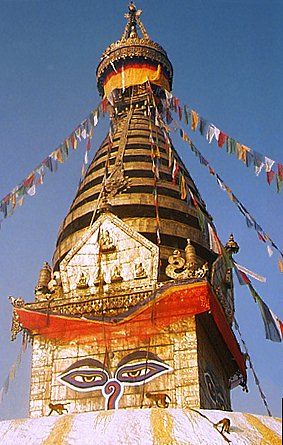
At the center stands the stupa, a dome-shaped structure representing the universe. The white dome symbolizes purity, while the golden spire represents enlightenment.
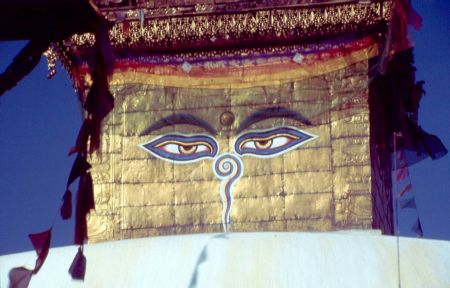
Perhaps the most recognizable feature is the pair of large eyes painted on all four sides of the stupa. These are known as the “Eyes of Buddha,” symbolizing awareness and compassion. Between the eyes is a spiral symbol representing unity and the path to enlightenment.
Surrounding the stupa are prayer wheels inscribed with sacred mantras. Visitors walk clockwise around the structure, spinning the wheels as a form of meditation and prayer.
The entire complex is designed to guide individuals toward inner peace, mindfulness, and spiritual awakening.
The Experience of Climbing to the Top
One of the most memorable parts of visiting Swayambhunath is the climb itself.
A long staircase leads up the hill, consisting of hundreds of steps. As you ascend, you’ll encounter monkeys, local vendors, pilgrims, and fellow travelers.
The climb can be physically demanding, especially in warm weather, but it is part of the experience. Each step brings you closer not only to the top but also to a sense of anticipation and achievement.
Once you reach the summit, the reward is immediate and powerful. The view opens up, the sounds of the city fade, and the spiritual energy of the site becomes more apparent.
What You Will See at the Top
At the summit, the central stupa dominates the landscape. Around it are smaller temples, shrines, statues, and prayer wheels.
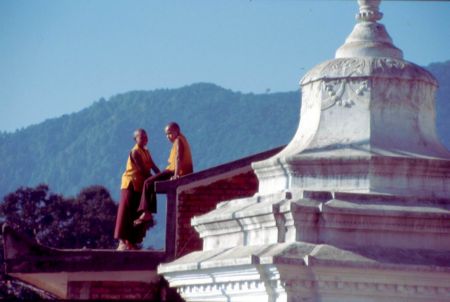
You’ll notice devotees performing rituals, lighting candles, and offering prayers. Monks in traditional robes move quietly through the complex, adding to the serene atmosphere.
The prayer flags stretch across the sky, carrying blessings with the wind. The combination of colors, sounds, and movement creates a sensory experience that is both calming and inspiring.
And of course, the monkeys are everywhere. They climb structures, interact with visitors, and add a sense of unpredictability to the environment.
Best Time to Visit for Maximum Impact
Timing can greatly enhance your experience at Swayambhunath.
Early morning is ideal for those seeking peace and quiet. The air is fresh, the crowds are minimal, and the spiritual atmosphere is at its strongest.
Sunset is perfect for photography and dramatic views. As the sun sets behind the hills, the sky changes colors and the city lights begin to appear, creating a magical scene.
Midday visits are still worthwhile but tend to be more crowded and less atmospheric.
How to Visit for Free or on a Budget
While there is an official entrance fee for certain areas, many travelers manage to explore Swayambhunath without paying.
This is often done by using side entrances or walking paths that are commonly used by locals. These routes may bypass ticket checkpoints or lead directly to open-access areas.
Even if you choose to pay the entrance fee, it is relatively low and contributes to the maintenance of the site.
Budget travelers consistently report that Swayambhunath offers one of the highest value experiences in Kathmandu.
Practical Travel Tips
Wear comfortable shoes, as the climb involves many steps and uneven surfaces.
Dress modestly to respect the religious nature of the site. Covering shoulders and knees is recommended.
Keep your belongings secure, especially around monkeys. Avoid carrying visible food, as it may attract them.
Stay hydrated, particularly if visiting during warmer months.
Take your time exploring. This is not a place to rush; it is meant to be experienced slowly and thoughtfully.
Cultural Etiquette and Respect
Understanding local customs can enhance your visit and show respect for the site.
Always walk clockwise around the stupa.
Avoid touching sacred objects unless it is clearly permitted.
Do not disturb monks or people engaged in prayer.
Ask permission before taking close-up photos of individuals.
Maintain a calm and respectful demeanor throughout your visit.
Why Swayambhunath Leaves a Lasting Impression
Many travelers describe their visit to Swayambhunath as one of the most memorable moments of their trip to Nepal.
It is not just the views or the architecture that make it special, but the feeling it creates. There is a sense of timelessness, a connection to something greater, and a moment of stillness that is rare in today’s fast-paced world.
Standing at the top, looking out over Kathmandu, surrounded by centuries of history and spirituality, you begin to understand why this place has been revered for so long.
Final Thoughts: A Must-Visit Destination in Nepal
If you are planning a trip to Nepal, visiting Swayambhunath Stupa should be at the very top of your list.
It combines natural beauty, cultural richness, historical depth, and spiritual meaning into one powerful experience.
Whether you are traveling on a budget or simply looking for something authentic and meaningful, Swayambhunath delivers far more than you would expect—especially for a place that can be enjoyed for free.
Travel agencies Kathmandu
+977-1 -4358033
+977 1 4417579
+977-9849455219
Ask your question about travel on our Forum