Once Upon a Time in Oslo - A Timeless Nordic Story You Will Never Forget
Once upon a time in Oslo, where the quiet waters of the fjord meet forests that stretch endlessly toward the horizon, a story began that feels both ancient and modern at the same time, a place where kings once ruled, ships once sailed into unknown worlds, and today travelers arrive searching for something they cannot quite name but always seem to find, because Oslo is not just a city, it is a layered narrative shaped by centuries of history, resilience, and quiet transformation, a capital that does not shout for attention but instead invites you to discover it slowly, step by step, street by street, moment by moment.
Oslo sits at the head of the Oslofjord in southeastern Norway, a location that has defined its identity for over a thousand years, blending maritime tradition with urban development, creating a rare balance between nature and civilization that few cities in the world can match . The story of Oslo begins long before modern buildings and electric lights, reaching back to the Viking Age when the region was a strategic settlement connected to trade routes, exploration, and cultural exchange, where early communities thrived and laid the foundation for what would eventually become one of the most livable cities in Europe.
The Origins of Oslo - From Viking Settlement to Royal Capital
Once upon a time, around the year 1049, a king named Harald Hardrada established Oslo as a trading town, though evidence suggests that people had already lived there even earlier, leaving behind traces of settlements and burial sites that hint at a deeper and older history . This early Oslo was not the bustling city we know today but rather a modest settlement surrounded by natural resources, where life revolved around trade, fishing, and survival in a challenging Nordic environment.
As time passed, Oslo grew in importance, becoming a religious and political center, especially after it became a bishopric and later a royal residence under King Haakon V, who moved his court there and began constructing the famous Akershus Fortress, a structure that still stands today as a symbol of Oslo’s enduring strength . The city’s strategic position made it a key hub for governance and defense, shaping its early development and influence in the region.
But Oslo’s story was never simple or linear, it was marked by hardship and renewal, by fires that destroyed entire neighborhoods and plagues that reduced its population dramatically, including the devastating Black Death in the 14th century which wiped out nearly half of its inhabitants . Each time, however, Oslo rose again, rebuilding itself stronger than before, a pattern that would define its character for centuries.
Fire, Rebirth, and Identity - The Transformation into Christiania
One of the most dramatic chapters in Oslo’s story occurred in 1624, when a massive fire destroyed much of the city, forcing a complete transformation, as King Christian IV decided not only to rebuild but to relocate the city closer to the Akershus Fortress, renaming it Christiania after himself . This decision reshaped Oslo physically and symbolically, marking a new era of urban planning, architecture, and governance.
For centuries, the name Christiania remained, reflecting a period when Norway was under Danish rule, and later Swedish influence, during which Oslo lost and regained its status as a capital multiple times, depending on political shifts and unions with neighboring countries . Yet even during these times of external control, the city continued to grow, developing industries, trade networks, and cultural institutions that would eventually make it the dominant city in Norway.
In 1925, the city reclaimed its original name, Oslo, symbolizing a return to its roots and a renewed sense of national identity, especially after Norway gained independence, marking a powerful moment in its historical narrative where the past and present converged into a unified story of resilience and pride .
Oslo Today - Where Nature Meets Modern Life
Once upon a time becomes today in Oslo, a city that has evolved into a modern capital without losing its connection to nature, where forests cover large parts of the municipal area and outdoor life is not just a hobby but a way of living, where you can move from urban streets to hiking trails in minutes, creating a unique rhythm that blends productivity with tranquility .
Oslo is now a center of commerce, culture, and innovation, hosting major industries, financial institutions, and global companies, while also maintaining a strong focus on sustainability and quality of life, earning recognition as one of the most environmentally conscious cities in the world . Its harbor remains a vital part of its economy, connecting it to international trade and reinforcing its maritime heritage.
Culturally, Oslo offers a rich landscape of museums, theaters, and galleries, including institutions dedicated to art, history, and exploration, reflecting both its Viking past and its modern creative spirit, making it a destination for travelers seeking depth rather than superficial experiences .
A Living Story - Experiences That Define Oslo
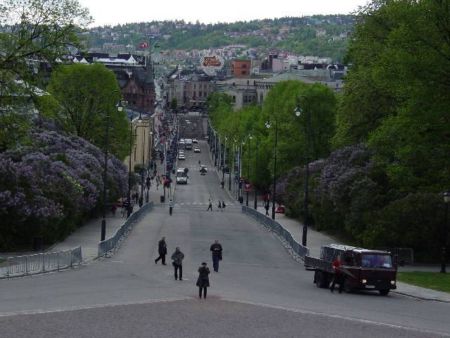
Walking through Oslo feels like stepping into a story that is still being written, where medieval fortresses stand beside contemporary architecture, where quiet neighborhoods reveal hidden parks and vibrant districts pulse with life, where every corner offers a glimpse into the city’s layered identity.
Visitors often notice the calm atmosphere, the cleanliness, and the balance between tradition and innovation, describing Oslo as a place where time moves differently, where you are encouraged to slow down and observe, rather than rush and consume, creating a travel experience that feels personal and meaningful.
The city’s connection to nature is perhaps its most defining feature, with the Oslofjord providing opportunities for boating and swimming, while the surrounding forests offer year round activities from hiking to skiing, reinforcing the idea that Oslo is not just a destination but a lifestyle.
Once upon a time in Oslo is not just a phrase, it is an invitation, a beginning rather than an ending, a story that continues with every visitor who arrives, explores, and becomes part of its unfolding narrative, a city that quietly leaves its mark not through spectacle but through subtlety, depth, and authenticity.
Travel agencies Oslo
+47-99883873
+47 22 33 30 90
+47 99883873
Ask your question about travel on our Forum